
1. What is Stamp Duty in Malaysia?

Stamp duty Malaysia is a tax imposed under the Stamp Act 1949 on certain written instruments that record transactions or legal obligations. The tax is payable when these documents are executed or signed.
Stamp duty generally applies to a wide range of documents, including:
- Property transfer documents
- Loan or financing agreements
- Share transfer instruments
- Lease and tenancy agreements
- Partnership or business agreements
These documents subject to stamp duty Malaysia must be stamped to be legally recognised. An unstamped or insufficiently stamped document may not be accepted as evidence in court or by public authorities.
2. Malaysia Stamp Duty Rates
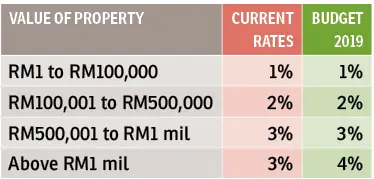
The applicable Malaysia stamp duty rates depend on the type of document and the value involved. Some instruments are subject to ad valorem duty, which is calculated based on the value of the transaction, while others are subject to fixed duties.
Property Stamp Duty Malaysia
For property transfers, stamp duty property transfer Malaysia follows a progressive rate structure based on the property value:
- 1% on the first RM100,000
- 2% on the next RM400,000
- 3% on the next RM500,000
- 4% on the amount exceeding RM1,000,000
This structure is commonly applied to the transfer of real estate ownership documents.
Stamp Duty on Loan Agreements
In property financing transactions, stamp duty loan agreement Malaysia is also imposed on the loan agreement document. The typical rate is 0.5% of the loan amount.
Stamp Duty on Share Transfers
Stamp duty may also apply to shares and securities. For example, transfers of unlisted shares are generally taxed at RM3 for every RM1,000 of the transaction value or market value, whichever is higher.
3. Documents Subject to Stamp Duty Malaysia

Stamp duty obligations may arise from various commercial and legal transactions.
Common documents subject to stamp duty Malaysia include:
- Sale and Purchase Agreements (SPA) for property
- Instruments of transfer of property ownership
- Loan or financing agreements
- Lease and tenancy agreements
- Share transfer instruments
- Debentures or securities agreements
- Partnership agreements and memoranda of understanding (MoU)
Because stamp duty is applied to the legal document itself, parties must ensure that the document is properly stamped before it can be used in official or legal proceedings.
4. Malaysia Stamp Duty Deadline and Payment

Stamp duty must be paid within a specific timeframe to comply with Malaysian tax regulations.
The Malaysia stamp duty deadline is generally:
- Within 30 days of executing the document in Malaysia, or
- Within 30 days after the document is received in Malaysia if signed overseas.
The tax can be paid through the Inland Revenue Board’s electronic stamping system. Once payment is completed, a stamp certificate will be issued as proof that stamp duty payment Malaysia has been made.
5. Stamp Duty Penalty Malaysia

Stamp duty must be paid within a specific timeframe to comply with Malaysian tax regulations.
The Malaysia stamp duty deadline is generally:
- Within 30 days of executing the document in Malaysia, or
- Within 30 days after the document is received in Malaysia if signed overseas.
The tax can be paid through the Inland Revenue Board’s electronic stamping system. Once payment is completed, a stamp certificate will be issued as proof that stamp duty payment Malaysia has been made.
Malaysia Stamp Duty Guide: Understanding Stamp Duty in Malaysia